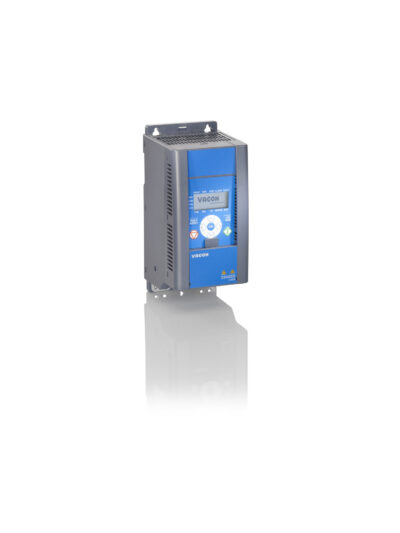

Industrial operations depend on reliable motor control to maintain productivity, manage energy consumption and support consistent equipment performance. Variable frequency drives (VFDs) let businesses regulate motor speed and torque to meet operational requirements, making them valuable across manufacturing, processing, HVAC, and other industrial applications. Danfoss Drives and Vacon Drives are two key options for businesses evaluating motor control technology for new installations, equipment upgrades, or maintenance projects.
Danfoss Drives Support Efficient Motor Control
Danfoss Drives develops drive technologies designed to control electric motors across a range of industrial and commercial applications. These drives can help businesses adjust motor operation to match demand, rather than running equipment continuously at a fixed speed.
This flexibility benefits applications involving pumps, fans, compressors, conveyors, and production machinery. By controlling motor speed, a well-selected drive can improve process control and potentially reduce energy consumption, especially in variable-torque applications where system demand changes throughout the day.
Choosing the right Danfoss drive involves reviewing the motor’s power rating, supply voltage, load characteristics and operating environment. Other considerations include control requirements, communication protocols, enclosure protection and compatibility with existing automation systems.
Businesses should also consider installation and maintenance requirements. Correct configuration, suitable electrical protection, and proper commissioning help ensure the drive meets the application’s needs.
Vacon Drives Provide Options for Industrial Applications
Vacon Drives are associated with variable frequency drive technology that regulates electric motor performance. Danfoss acquired Vacon in 2014, bringing the two names under the same wider drive technology business.
Vacon drive models have been used in applications such as pumps, fans, material handling systems and industrial machinery. Drive features and control capabilities vary by model, so businesses should identify the exact product before comparing specifications or planning a replacement.
When sourcing Vacon drives, check the product code, power rating, voltage, current capacity, and control configuration. The drive must also be compatible with the motor and the wider control system. For replacement projects, matching the existing unit’s specifications can help reduce engineering changes and installation complications.
Older installations may require additional checks around product availability, documentation, firmware compatibility and spare parts. These considerations are especially important when equipment downtime could affect production schedules.
Danfoss Drives and Vacon Drives Require Application-Led Selection
Selecting a variable frequency drive involves more than comparing brand names. The most suitable unit depends on the motor, the driven equipment and the operating conditions.
For example, a pump installation may require a drive configured to respond to pressure or flow demand. A conveyor application may place greater emphasis on starting torque, speed regulation and integration with factory automation. Fans and ventilation systems may have different control and protection requirements.
Before purchasing a drive, engineering and procurement teams should assess:
- Motor specifications: Confirm voltage, current, power and operating characteristics.
- Load requirements: Identify starting torque, speed range and expected operating cycles.
- Environmental conditions: Consider temperature, dust, moisture and enclosure requirements.
- System integration: Check communication interfaces and compatibility with existing controls.
- Replacement compatibility: Verify the complete model code and configuration of the existing unit.
- Support requirements: Review documentation, commissioning needs and spare-part availability.
This approach helps businesses identify suitable Danfoss Drives or Vacon Drives for their specific application, rather than selecting equipment based on incomplete product information.
Digicon Solutions Helps Businesses Source Drive Technology
Digicon Solutions provides a starting point for businesses looking for industrial automation components and drive-related solutions. For companies assessing Danfoss Drives or Vacon Drives, accurate product identification and technical compatibility are important parts of the sourcing process.
Industrial buyers should establish the required model, rating and configuration before requesting a quotation. Where a drive is replacing an existing unit, sharing the full product code and relevant application details can help clarify requirements and reduce the risk of ordering an unsuitable component.
For new installations, identifying the motor specifications and control objectives early can also help streamline equipment selection. Businesses should confirm current stock, product availability, delivery arrangements and any technical support included directly with the supplier.
Digicon Solutions can be considered as part of this sourcing process, with final product selection guided by verified specifications and the requirements of the installation.
Correct Drive Selection Supports Reliable Industrial Operations
Variable frequency drives play an important role in managing motor performance across industrial environments. When correctly specified and configured, they can support precise speed control, smoother operation and improved process management.
Danfoss Drives and Vacon Drives offer options to consider across different motor control applications, but the correct choice depends on the particular model and operating requirements. Businesses should verify product details, electrical compatibility and control-system requirements before making a purchasing decision.
By taking an application-led approach and confirming technical details in advance, engineering and procurement teams can make more informed choices. Digicon Solutions provides a point of contact for businesses exploring drive technology and industrial components, helping them move towards sourcing decisions based on their operational needs.