
A tailored jacket reveals much about its maker before anyone notices the label. The way the shoulder follows the body, the movement of the fabric across the chest, and the natural fall of the lapels reflect decisions made during cutting and construction. These qualities are central to Neapolitan tailoring, a distinctive approach to menswear shaped by generations of skilled craftspeople. Among the companies associated with this tradition, Kiton has established an international reputation for its commitment to fine materials and elaborate garment construction.
The company’s history began in 1968, when Ciro Paone established a tailoring business in Arzano, near Naples. His family had longstanding connections with the textile trade, providing an understanding of fabrics and relationships within the clothing industry. Rather than concentrating exclusively on the appearance of finished garments, Paone developed a business centered on the skills required to produce them. This approach helped establish Kiton as a recognizable name in Italian luxury menswear while preserving a connection to the tailoring traditions of southern Italy.
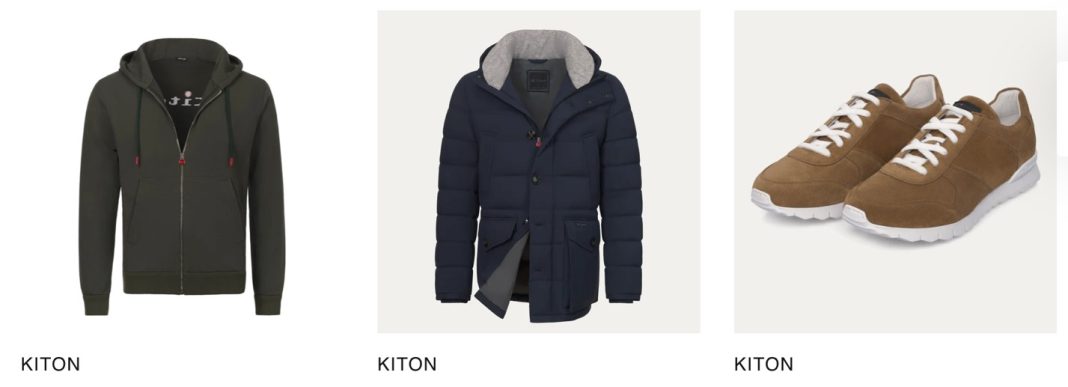
The brand’s identity is particularly apparent in its tailored jackets, but its collections extend to shirts, knitwear, trousers, outerwear, and casual clothing. Buyers exploring Kiton at Sartale can compare these different categories and consider how the manufacturer’s approach to materials and design translates beyond formal tailoring. A cashmere sweater and a constructed jacket serve different purposes, yet both invite questions about fabric selection, fit, finishing, and long-term performance. Understanding these distinctions provides a more useful perspective on luxury clothing than treating every product bearing a prestigious label as equally desirable.
The Origins of Kiton and Neapolitan Tailoring
Neapolitan tailoring developed in response to particular cultural and practical requirements. The warm climate of southern Italy encouraged approaches to jacket construction that could reduce unnecessary weight and allow relatively comfortable movement. Local tailoring workshops also cultivated recognizable preferences in shoulder shape, chest construction, and garment proportions. These characteristics evolved through individual makers rather than through a single standardized method.
One of the defining features associated with Neapolitan jackets is the natural shoulder. Instead of relying heavily on padding to establish a pronounced outline, the construction often follows the wearer’s existing shoulder line. This can create a softer appearance and allow the fabric to respond more freely to movement. The precise result depends on the pattern, materials, and method of attaching the sleeve.
Kiton adopted many of these regional principles while developing a recognizable interpretation of luxury tailoring. The company emphasizes skilled cutting, fabric selection, and detailed construction. Its growth from a small workshop into an internationally recognized manufacturer demonstrates how a regional craft tradition can develop into a larger commercial enterprise without abandoning its stylistic origins.
A significant part of the company’s philosophy concerns the transmission of practical knowledge. Kiton established a tailoring school to help train new generations of craftspeople. Such initiatives address a genuine challenge facing labor-intensive manufacturing, since advanced tailoring skills require sustained practice and cannot be acquired through theoretical instruction alone.
The heritage of a tailoring house is meaningful only when its principles remain evident in actual garments. Historical reputation provides context, but buyers should still examine the construction and fit of the particular jacket or suit they intend to purchase. A garment’s quality ultimately depends on how successfully those inherited techniques are applied.
How Neapolitan Jacket Construction Works
A softly tailored jacket differs from a heavily structured one in several important ways. Shoulder padding may be reduced, the chest can be constructed for greater flexibility, and the internal components may be selected to support the fabric without creating excessive rigidity. These decisions influence the way the jacket moves and how closely its shape follows the wearer.
The relationship between the shoulder and sleeve is particularly important. Some Neapolitan jackets use a shirt-style sleeve attachment, commonly known as spalla camicia. Depending on the garment’s construction, this technique can produce subtle gathering around the sleeve head. The resulting appearance is different from the sharply defined shoulder line found in more structured tailoring.
However, softer construction should not be confused with an absence of technical complexity. A jacket must still maintain appropriate balance between its front and back panels, allow the collar to rest correctly against the neck, and accommodate normal movement. Achieving these results with relatively little visible structure demands precision in cutting and assembly.
The internal canvas is another component worth understanding. In traditional tailored construction, a canvas layer helps support the jacket’s front and contributes to the shape of the chest and lapels. Its composition, placement, and attachment influence how the fabric behaves. A softer jacket can still incorporate internal support, while a heavily structured appearance does not necessarily indicate superior construction.
Kiton’s reputation is closely associated with labor-intensive tailoring, although construction details should be assessed for each garment rather than assumed to be identical throughout the collection. A formal suit, a casual jacket, and a lightweight seasonal garment can have different technical requirements. Their quality depends on how effectively the chosen construction serves the intended design.
The most convincing result is a jacket that maintains its proportions without feeling unnecessarily restrictive. The shoulders should sit naturally, the lapels should follow the chest, and the garment should permit ordinary movement. Decorative elements may contribute to its character, but comfort and balance provide more substantial evidence of accomplished tailoring.
Fine Fabrics and Their Influence on Character
Fabric selection is fundamental to the appearance and performance of tailored clothing. A jacket’s construction can support the cloth, but it cannot entirely overcome the limitations of an unsuitable material. The weight, weave, elasticity, and surface texture of a textile affect its drape and determine how it responds to cutting, pressing, and repeated wear.
Kiton has longstanding associations with fine Italian textiles and has incorporated the expertise of fabric manufacturers into its business. The company’s connection with the historic Carlo Barbera mill in Biella illustrates the importance it places on textile production. This relationship reflects a broader characteristic of Italian luxury menswear, in which the quality of finished garments is closely connected to specialist suppliers and manufacturing traditions.
Wool offers an extensive range of possibilities for tailoring. Fine worsted fabrics can produce a smooth and formal appearance, while textured or brushed wool creates a softer visual character. Fabric weight matters, but it should not be considered independently of weave and construction. A lightweight material may be suitable for warmer conditions, although breathability also depends on lining and internal structure.
Cashmere introduces different considerations. Its softness and insulating properties make it desirable for knitwear, coats, and certain tailored garments. However, not all cashmere fabrics behave identically. Fiber length, yarn preparation, density, and finishing influence their resistance to abrasion, tendency to pill, and ability to retain shape.
Silk, linen, and cotton also contribute to the character of luxury menswear. Linen creates a relaxed appearance and develops characteristic creases during wear. Silk can influence texture and drape when incorporated into suitable blends, while cotton offers a range of practical possibilities for shirts and casual clothing. The presence of an expensive fiber does not automatically guarantee superior performance.
Several characteristics deserve consideration when examining premium fabrics.
- Fiber composition. The material should suit the garment’s function rather than merely provide an attractive specification.
- Fabric weight. The cloth needs enough substance to support the intended shape without unnecessary bulk.
- Weave and texture. These influence drape, appearance, breathability, and compatibility with other garments.
- Surface consistency. The material should display appropriate finishing without obvious defects or irregularities.
- Crease recovery. The fabric’s response to compression and movement should match expected wearing conditions.
- Maintenance requirements. Delicate fibers and specialized finishes may require more careful treatment.
The most appropriate fabric is not necessarily the rarest or softest. A frequently worn business jacket may benefit from a material that maintains its appearance throughout the day. A relaxed seasonal jacket can prioritize a different combination of comfort, texture, and drape. The intended use should guide the evaluation.
The Role of Skilled Craftsmanship
Luxury tailoring often emphasizes the number of hours devoted to production or the quantity of handwork involved. Such information can illustrate manufacturing complexity, but it does not independently establish how well a garment performs. The purpose of craftsmanship is to achieve results that improve construction, fit, or appearance.
Cutting provides a useful example. The positioning of pattern pieces influences how the fabric drapes and how its design appears on the finished garment. Checks and stripes require careful planning, particularly when the cloth has a prominent pattern. Errors made during cutting can be difficult to correct later, regardless of the precision of subsequent stitching.
Pressing is equally significant in tailored clothing. Proper shaping uses heat, moisture, pressure, and technical skill to influence the form of suitable fabrics. This process helps establish the curvature of the chest, the roll of the lapels, and the contours of different garment sections. It is part of construction rather than simply a finishing operation intended to remove wrinkles.
Hand sewing remains valuable in areas where flexibility, precise positioning, or a particular finish is desired. However, machine stitching can provide excellent strength and consistency. The distinction between handmade and machine-made clothing is therefore more complicated than a straightforward hierarchy of quality.
Kiton’s emphasis on tailoring skills should be understood within this technical context. The company’s investment in training reflects the importance of preserving knowledge that relies on experienced judgment. A skilled tailor must understand how different fabrics respond to handling, where additional support is necessary, and how proportions interact with body shape.
The finished garment offers the clearest opportunity to evaluate these decisions. A jacket should hang correctly, its seams should remain secure, and its structure should function without drawing attention to itself. Elaborate manufacturing methods are meaningful when they produce tangible advantages for the wearer.
Understanding Kiton’s Approach to Personal Style
Kiton is associated with refined Italian tailoring, but its broader collections also include garments intended for less formal settings. Knitwear, casual trousers, shirts, and outerwear allow the brand’s aesthetic to extend beyond the conventional business suit. These categories should be judged according to their individual materials and construction rather than the standards used for tailored jackets.
A softly constructed jacket can work effectively with wool trousers and a fine-gauge sweater. Depending on its fabric and design, it may also complement refined denim or cotton trousers. The relationship between texture and formality is important. A heavily textured jacket generally offers greater flexibility in casual combinations than one made from smooth, formal suiting cloth.
Color contributes to this versatility. Navy, gray, and various shades of brown provide practical foundations for tailored clothing. Muted greens, cream, and selected seasonal colors can introduce variety without requiring a complete wardrobe built around them. The success of a combination depends on the proportions and surfaces of the garments as much as their colors.
The fit of premium knitwear deserves consideration alongside its material. Cashmere or wool sweaters should provide sufficient movement without excessive stretching across the shoulders or chest. Ribbed cuffs and hems should maintain their intended shape, while the garment’s length needs to work with the trousers and jackets worn alongside it.
Casual clothing also raises different durability questions. A delicate sweater and a pair of denim trousers experience different forms of wear. Their construction, maintenance requirements, and expected service life should therefore be evaluated separately.
An expensive garment becomes more useful when it fits naturally into an established wardrobe. A jacket that works with several pairs of trousers may justify more frequent use than a highly distinctive design that requires a specific combination. Individual taste still matters, but versatility provides a practical basis for assessing a purchase.
Evaluating Kiton Before Making a Purchase
Brand reputation can justify taking a closer look at a garment, but the purchasing decision should depend on its individual merits. This is particularly important at the upper end of the menswear market, where prices can reflect labor-intensive production, expensive textiles, limited manufacturing capacity, and brand positioning.
Fit should be the first consideration. Jacket shoulders are difficult to alter substantially, and an unsuitable chest or collar balance can create problems that ordinary adjustments cannot easily solve. A jacket should close comfortably, allow natural movement, and maintain a convincing silhouette when the wearer is standing and sitting.
The fabric should then be assessed according to the intended use. A delicate cashmere jacket may be attractive for occasional wear but less suitable for demanding travel schedules. A lightweight wool garment may provide greater versatility in particular climates. Materials should be selected according to actual conditions rather than their prestige.
Construction details are worth examining, especially internal finishing, lining, button attachment, and the relationship between the fabric and the jacket’s structure. On patterned garments, the alignment of checks or stripes at prominent seams can provide useful evidence of cutting precision. No single decorative detail should determine the assessment.
Care requirements also influence the true cost of ownership. Fine wool and cashmere garments may need careful storage, occasional professional cleaning, and protection against unnecessary abrasion. Following the manufacturer’s instructions helps preserve their appearance, although even well-maintained clothing will eventually show signs of wear.
Price should be considered in relation to realistic frequency of use. A jacket worn regularly over several years may provide greater practical value than an equally expensive piece reserved for rare occasions. This calculation does not eliminate the pleasure of owning distinctive clothing, but it helps separate personal appreciation from assumptions about financial value.
What Makes the Neapolitan Tradition Enduring
Kiton’s significance within Italian menswear is connected to its interpretation of Neapolitan tailoring and its emphasis on specialist craftsmanship. The company’s history illustrates how a regional approach to cutting, construction, and fabric selection can develop a recognizable identity while remaining relevant to different categories of clothing.
The lasting appeal of this tradition does not depend solely on handmade details or exceptionally fine materials. It rests on an understanding of how a garment should relate to the human body. Appropriate proportions, comfortable construction, and carefully selected fabrics provide qualities that can be appreciated during ordinary wear.
Recognizing these characteristics also allows buyers to make more informed comparisons. A prestigious name may encourage interest, but fit, workmanship, fabric suitability, and maintenance requirements determine whether a particular garment is the right choice. Those criteria apply equally to formal suits, relaxed jackets, and premium casual clothing.
The strongest expression of Neapolitan tailoring is often the least conspicuous. A jacket sits comfortably on the shoulders, follows movement without excessive resistance, and retains the shape intended by its maker. The skill behind these qualities may not be immediately visible, but it becomes apparent through the experience of wearing the garment. For anyone interested in luxury menswear, that relationship between craftsmanship and comfort is far more meaningful than the label alone.