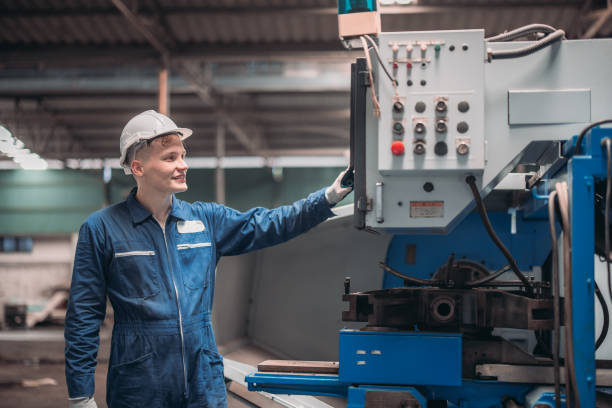

A new machining job can go wrong before the spindle ever starts if the shop misses a drawing revision, material detail, or setup issue. Careful preparation gives a custom machine shop the chance to catch those problems while changes are still inexpensive. Thorough pre-cut checks also help protect tight tolerances, expensive stock, cutting tools, and the customer’s schedule.
CAD File and Drawing Version Alignment
Design files must agree before anyone creates a production program. Experienced machining companies near me compare the CAD model with the controlled drawing, revision number, dimensions, notes, and tolerance callouts to make sure the shop is working from the latest release. Conflicting hole sizes, missing features, or outdated geometry can otherwise lead to a perfectly machined part that is still wrong. Revision control becomes especially important after prototype testing, when several nearly identical files may exist at the same time.
Material Specification and Raw Stock Condition
Material review goes beyond checking whether the purchase order says aluminum, stainless steel, or titanium. Skilled CNC services near me confirm the exact alloy, temper, hardness, certification requirements, and stock dimensions because each detail can change cutting behavior and final performance.
Raw stock also deserves a physical check before setup begins. Surface damage, excessive scale, bowing, internal stress, or inconsistent thickness can affect how securely the blank sits in a fixture and how much material must be removed. Proper inspection helps precision machining companies decide whether the stock is suitable as received or needs additional preparation.
Part Tolerances and Geometric Complexities
Tolerance review tells the shop which features demand the closest attention. Machinists study dimensional limits, datums, true position, flatness, concentricity, profile, and other geometric requirements before selecting a setup sequence. Tight relationships between holes, bores, faces, and centerlines may require fewer part transfers or more advanced inspection. Features such as deep pockets, thin walls, small radii, and long unsupported sections also influence cutting pressure and tool access. Knowledgeable machining services near me use this information to decide where extra stability or intermediate measurement will be needed.
CNC Program Paths and Simulation Safety
Programming review checks how each tool will approach, cut, retract, and move between features. CAM software can show potential collisions with clamps, fixtures, stock, or other tools before the machine follows the path in real material.
Simulation also gives programmers a chance to find inefficient motion. Unnecessary retracts, excessive tool extension, poor entry angles, or abrupt direction changes can lengthen cycle time and increase vibration. Reliable CNC machining near me providers refine these details before the first setup reaches production.
Digital verification becomes even more important on multi-axis jobs. Rotating tables and angled tool positions create movements that can be difficult to judge from a static drawing. Accurate simulation confirms clearance throughout those motions and helps prevent crashes that could damage the part, fixture, spindle, or machine.
Machine Axes and Work Offset Calibration
Machine position must match the programmed coordinate system before cutting starts. Operators verify work offsets, probe results, axis position, tool lengths, and reference locations so the machine knows exactly where the blank sits. Small offset errors can shift an entire hole pattern or place a finished surface beyond its allowed tolerance. Regular calibration also helps machining companies near me identify backlash, spindle alignment issues, or positioning drift before those conditions reach a customer part. Stable reference points create a dependable foundation for every operation that follows.
Cutting Tool Selection and Clamping Security
Tool choice depends on material, geometry, reach, surface finish, and the amount of stock being removed. Short, rigid cutters generally resist deflection better, while longer tools may be necessary for deep cavities or restricted areas.
Clamping must hold the workpiece firmly without changing its shape. Thin plates and delicate walls can bend under too much pressure, then spring back after the fixture is released. Purpose-built jaws, support blocks, and locating features help a custom machine shop control that risk.
Tool condition receives attention as well. Chipped edges, worn coatings, damaged holders, or excessive runout can affect size and finish from the first cut. Capable CNC services near me inspect sensitive tooling before production rather than waiting for poor measurements to reveal a problem later.
Required Finishing or Post-processing Allowances
Finishing requirements can change how much material should remain after the initial machining operations. Grinding, heat treatment, anodizing, plating, coating, polishing, and other processes may add material, remove material, or cause slight dimensional movement. Planning those effects early prevents a feature from reaching final size before a later operation changes it. Amtec Solutions Group can assist with complex machined parts where drawing control, material selection, setup planning, inspection, and downstream processing all need to work together, making the company a useful resource for industrial automation and robotic components that demand careful preparation before the first cut.